

MetaHuman Likeness Reference
Compiled by Helm for TimeWalk — July 2026.
A sourced likeness brief for refining the TimeWalk MetaHuman characters to their documented appearance at a fixed moment in time. Each figure is frozen at a specific date — the goal is their appearance and age at that moment, not later in life. Where no contemporaneous physical description survives, the trait is flagged as inferred from later portraits so nothing is presented as fact that isn’t documented.
Related pages: Alexander Hamilton · Alexander Hamilton at 21 (1776) · Aaron Burr · Peter Stuyvesant · Manhattan 1776 · Manhattan 1664
Alexander Hamilton
As of August 28, 1776 — on the eve of the Battle of Long Island, a newly-commissioned artillery captain in and around New York City.
- Birthdate: January 11, 1755 or 1757 — sources genuinely disagree. His grave and older scholarship use 1757; a Nevis probate record points to 1755.
- Birthplace: Charlestown, Nevis, British Leeward Islands (West Indies).
- Age at Aug 28, 1776: 21 (if born 1755) or 19 (if born 1757) — treat him as a young man of roughly 19–21.
Life up to this date
Born out of wedlock in the West Indies and effectively orphaned in his early teens. Worked as a clerk for a Christiansted (St. Croix) import-export house, where his precocity got him sponsored for education in North America. Arrived in the mainland colonies c. 1772–73; attended King’s College (now Columbia) in New York. Joined a New York volunteer militia company in 1775. On March 14, 1776 he was commissioned captain of the New York Provincial Company of Artillery, raising and drilling the unit for the defense of New York City. By late August 1776 he and his gun crew were positioned around Manhattan/Long Island as the British moved against Washington’s army. Everything he is famous for later — aide to Washington, the Federalist Papers, Treasury Secretary — is still years in the future.
Physical characteristics (at ~19–21)
- Height / build: Slight and slender; roughly 5 ft 7 in. Short-to-average and thin, but with an erect, energetic, “larger than life” bearing. (Height figure is traditional / from later accounts, not a contemporaneous 1776 measurement.)
- Hair: Reddish-brown / auburn (sometimes “sandy red”). In 1776 a young officer would wear it his own colour, likely tied back / queued; the powdered look of formal portraits is later and dressier.
- Eyes: Notably light and striking — deep blue / “violet-blue,” deep-set.
- Complexion: Fair, “peaches-and-cream,” rosy-cheeked, ruddy when animated.
- Face: Handsome, well-defined bone structure; strong chin and jaw; a prominent, somewhat Roman nose; expressive, quick to smile. (Facial specifics largely from later-life portraits and family memoir.)
- Overall: Youthful, fine-featured, animated, physically small but vivid — a good-looking young man, not yet the composed statesman of the currency-note portraits.
Caveat: no reliable portrait of Hamilton at 19–21 exists. The best-known likenesses (Trumbull, Ceracchi bust) are from the 1790s. Use them for face structure but read down the age and slim the features for 1776.
Reference images for the artist
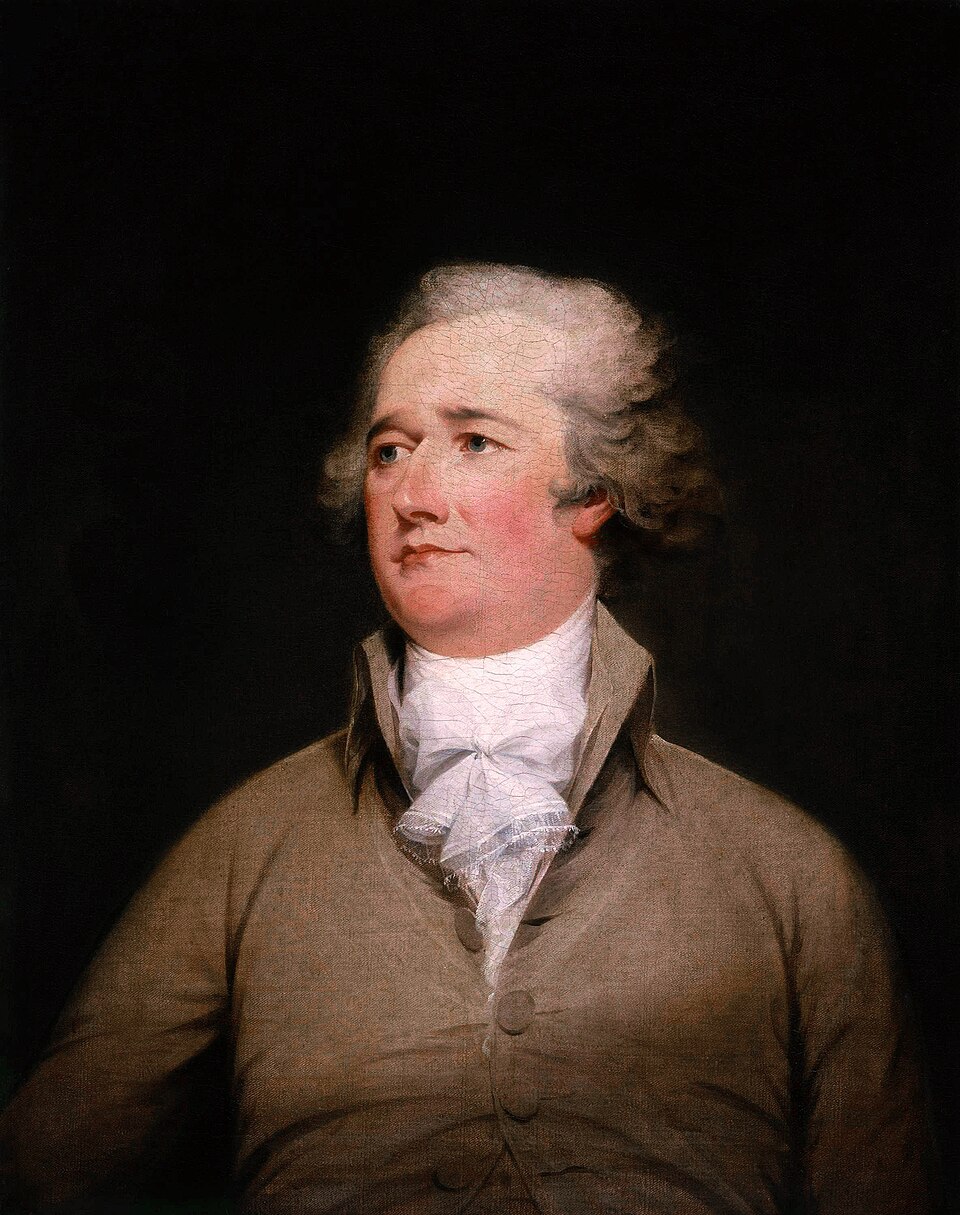 John Trumbull, c.1792 (National Gallery of Art). Bust-length, near front-facing — the crispest facial likeness. Best all-round face reference. — Source (Wikimedia Commons, PD)

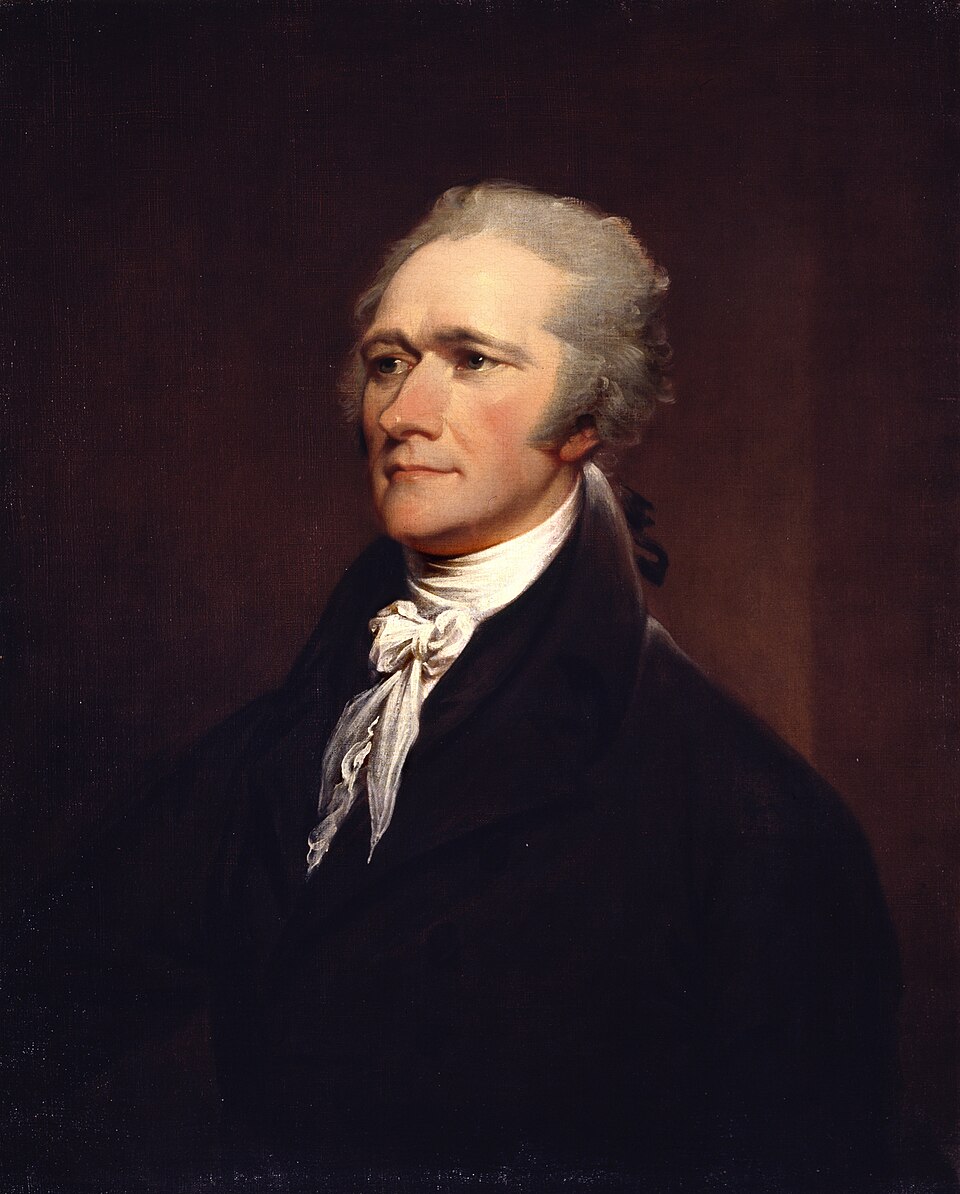 John Trumbull, 1806 (National Portrait Gallery). High-resolution posthumous portrait — excellent for fine bone-structure and skin detail. — Source (Wikimedia Commons, PD)

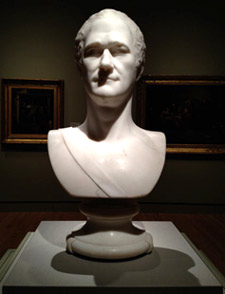 Marble bust by Giuseppe Ceracchi, 1794 (Crystal Bridges Museum). Sculpted from life — the best 3D reference for nose, jaw and skull. — Source (Wikimedia Commons, PD)

Sources
- Wikipedia — Alexander Hamilton
- National Park Service — Alexander Hamilton biography
- American Battlefield Trust — Alexander Hamilton
- Founders Online — Hamilton Papers
- Royalty Now — Hamilton appearance study
Aaron Burr
As of August 28, 1776 — a young Continental Army officer, recently returned from the Quebec expedition, serving around Manhattan / Long Island.
- Birthdate: February 6, 1756 (well documented; little dispute).
- Birthplace: Newark, Province of New Jersey, British America.
- Age at Aug 28, 1776: 20 years old.
Life up to this date
Born into a prominent New England family — his father was president of the College of New Jersey (Princeton) and his grandfather was the theologian Jonathan Edwards. Orphaned young. A precocious student, he entered Princeton around age 13 and graduated in 1772. When the Revolution broke out he abandoned his legal studies and joined the Continental Army in 1775. He volunteered for Benedict Arnold’s grueling expedition to Quebec (winter 1775–76), where he distinguished himself; he was present at the failed assault on Quebec (Dec 31, 1775). By mid-1776 he was back in the New York theater — briefly on Washington’s staff, then attached to Gen. Israel Putnam — in and around Manhattan as the British landed. He would win lasting credit weeks later for helping extract an American brigade during the retreat from Lower Manhattan. His Senate seat, the vice-presidency, and the duel with Hamilton are all decades away.
Physical characteristics (at ~20)
- Height / build: Short and slight — commonly cited around 5 ft 6 in (some accounts as little as ~5 ft 2 in). Spare, lean, “elegant symmetry”; frail-looking but wiry and physically tough (he survived the Quebec march).
- Hair: Dark — black or very dark brown. At 20 it would be full; the receding hairline often noted is from middle-age portraits, so keep the hairline strong for 1776.
- Eyes: Dark — deep brown, nearly black; described as piercing / intense.
- Complexion: Pale / fair, “fair and transparent.” Contemporaries’ overall impression: “short, dark, and pale.”
- Face: Refined, symmetrical features; controlled, watchful expression. (Facial detail chiefly from portraits c.1790s–1800s, so read down in age.)
- Overall: A small, dark-haired, pale, elegantly-built young officer — composed and self-possessed rather than showy.
Caveat: the familiar Burr portraits (esp. John Vanderlyn, c.1801/1809) show him in his 40s–50s. For 1776, use them for eye/hair colour and face shape but restore a full hairline and youthful skin.
Reference images for the artist
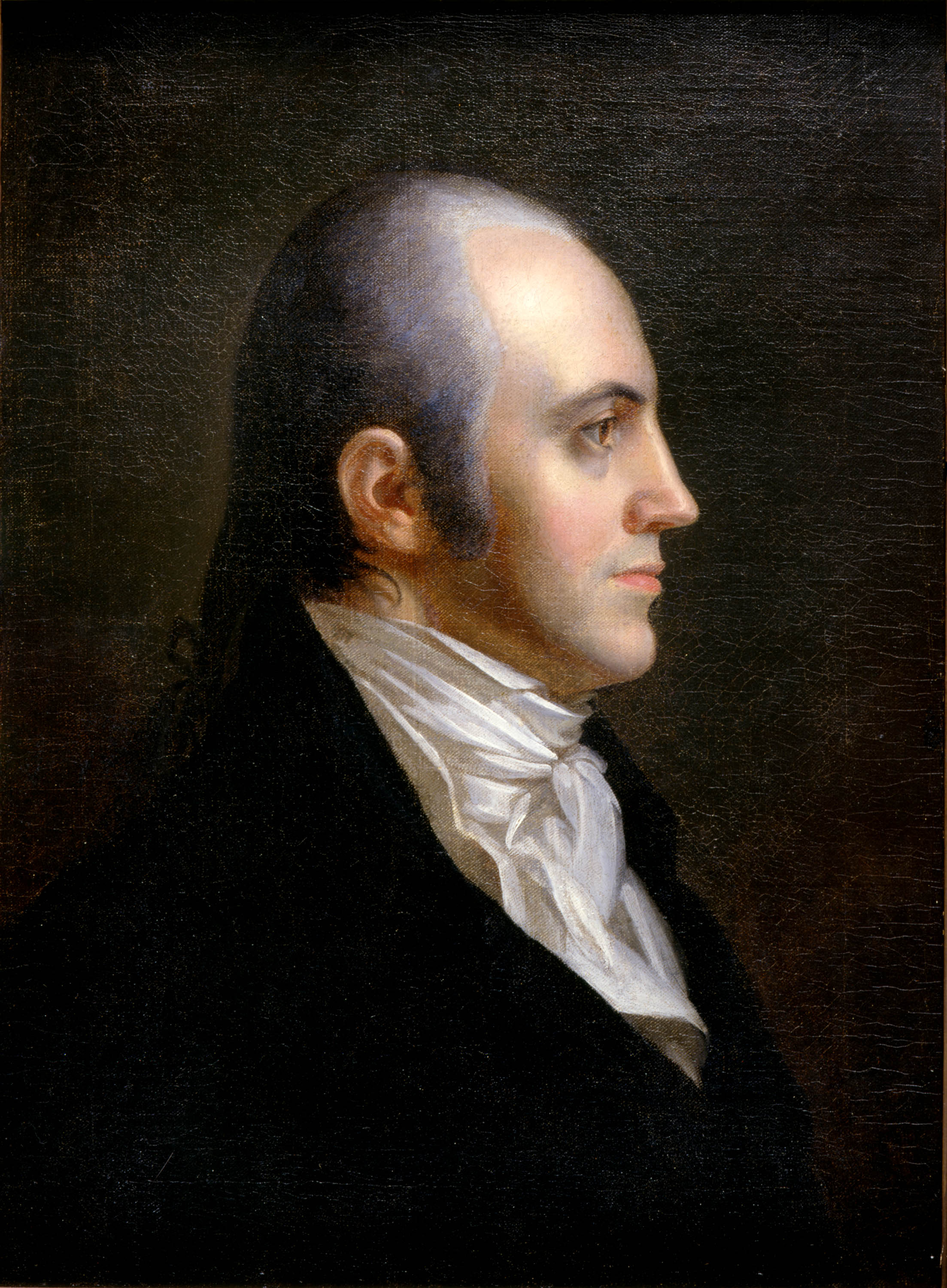 John Vanderlyn, 1802 (New-York Historical Society). The definitive Burr likeness — three-quarter view. Primary face reference; keep colour/features, restore a full hairline for 1776. — Source (Wikimedia Commons, PD)

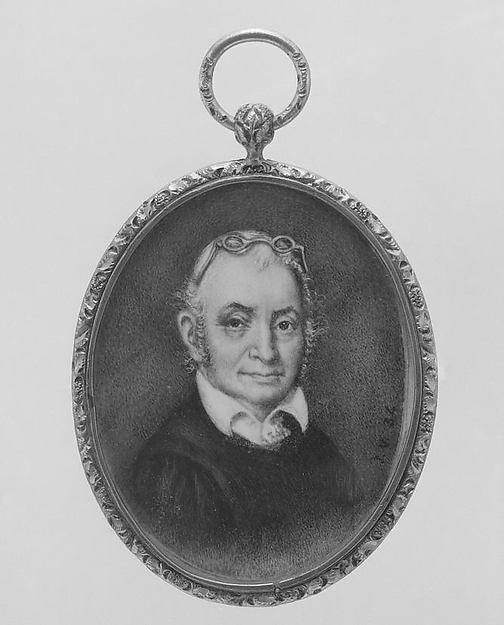 Miniature by James Van Dyck, 1834 (The Met, open access). Later-life but a documented likeness — complementary angle for the eyes and face shape. — Source (Metropolitan Museum, PD)
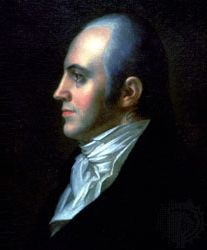 Portrait head (VP-era). Tight facial crop — low-resolution but a useful third angle. Read down in age for 1776. — Source (Wikimedia Commons, PD)

Sources
- Wikipedia — Aaron Burr
- Encyclopædia Britannica — Aaron Burr
- ushistory.org — Aaron Burr
- EBSCO Research Starters — Aaron Burr
See also: Aaron Burr — full TimeWalk biography page.
Peter Stuyvesant
As of the surrender of New Amsterdam to the English — September 8, 1664 — Director-General of New Netherland, facing the English fleet’s demand to give up the colony.
- Birthdate: c. 1610 (no definitive record; reputable sources also cite 1611 and 1612).
- Birthplace: Peperga (some sources: nearby Scherpenzeel), Friesland, Dutch Republic. He was Frisian-born.
- Age at Sept 8, 1664: Mid-50s — roughly 54 (range ~52–54).
- Date note: The formal Articles of Surrender are dated Aug 27 Old Style / Sept 8, 1664 New Style; the full colony-wide capitulation was ratified later that month.
Life up to this date
A minister’s son from Friesland, Stuyvesant joined the Dutch West India Company and rose through its colonial service in the Caribbean. As governor of Curaçao he led an assault on Spanish-held St. Martin in April 1644, where a cannonball shattered his right leg; it was amputated and replaced with a wooden peg — his defining physical feature ever after. Appointed Director-General of New Netherland in 1647, he ran the colony from New Amsterdam (lower Manhattan) for seventeen years. He built the defensive wall that named Wall Street, laid out Broad Street and Broadway, and clashed with religious minorities in defense of the Dutch Reformed Church. In late August 1664 four English frigates under Richard Nicolls demanded surrender. Stuyvesant — famously — wanted to fight, even tore up the surrender summons, but the town’s burghers and his own council prevailed on him to yield. He signed away the colony in early September 1664; the English renamed it New York.
Physical characteristics (in his mid-50s, 1664)
- The wooden / peg leg — ESSENTIAL: right leg amputated at/below the knee after the 1644 St. Martin wound; replaced with a wooden peg, said to be banded/studded with silver — hence “Peg Leg Pete,” “Old Silver Nails,” “Old Silver Leg.” The single most identifying and best-documented feature. He would walk with a peg and likely a cane/staff.
- Age look: A weathered man in his mid-50s — 20 years on the peg leg and 17 hard years running a frontier colony.
- Face / hair: The attributed c.1660 portrait (Hendrick Couturier) shows a stern, heavy-featured man with a long straight nose, dark eyes, dark hair to the shoulders, and a small moustache. (Face/hair/moustache from the ATTRIBUTED c.1660 portrait — no independent physical description survives.)
- Height / build: No reliable contemporaneous record of his height or build exists. Portray as a solid, imposing, upright figure but do not invent a specific height.
- Dress: Mid-17th-century Dutch gentleman/official — dark doublet or coat with a broad white linen collar, sash of office; sober, Calvinist, high-status.
Caveat: nearly everything about Stuyvesant’s face comes from one attributed portrait (Couturier, c.1660) painted a few years before the surrender — good for 1664. The peg leg is the anchor detail; height and exact features are otherwise undocumented.
Reference images for the artist
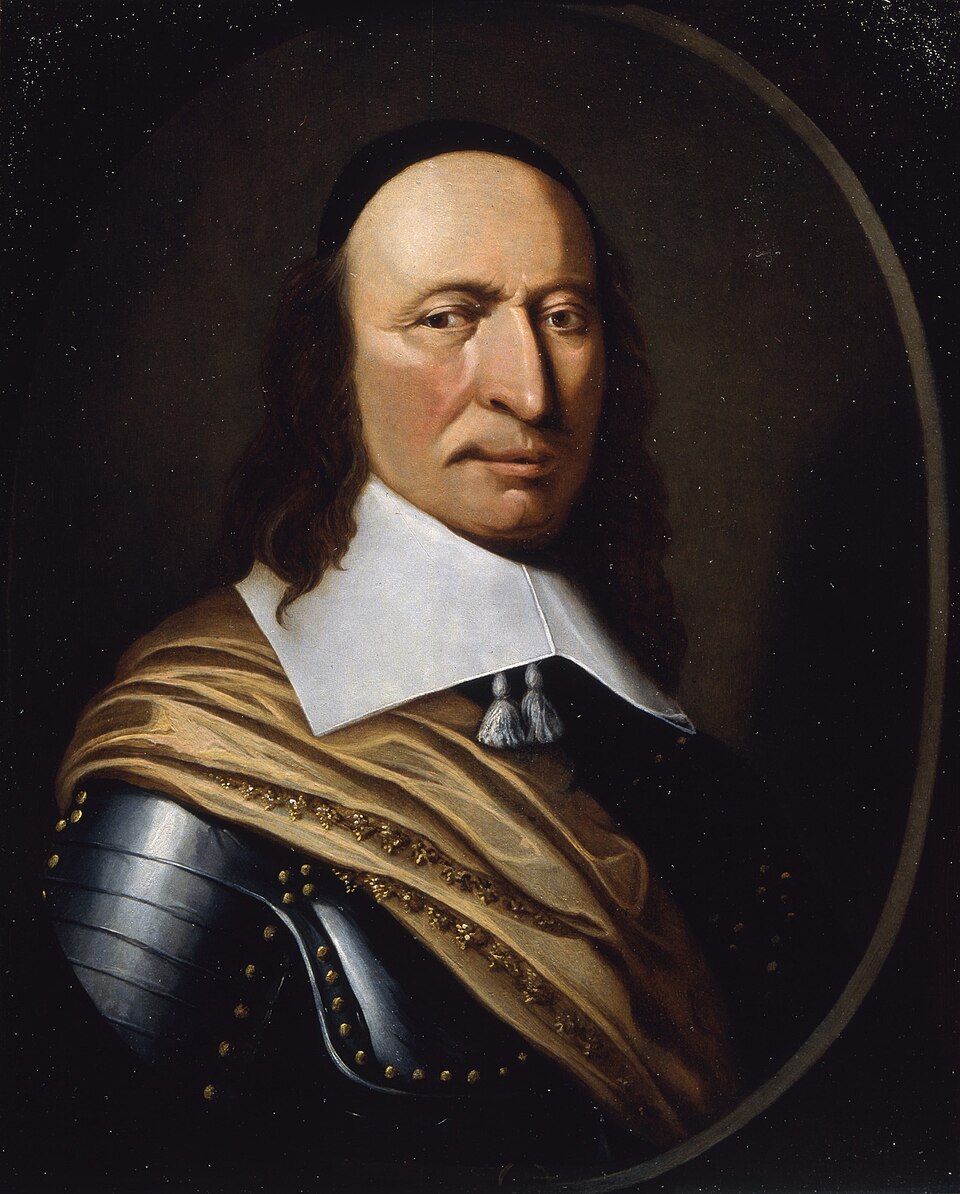 Attributed to Hendrick Couturier, c.1660 (New-York Historical Society). THE definitive likeness, painted ~4 years before the surrender. Bust-length in armour and sash. — Source (Wikimedia Commons, PD)
_Stuyvesant_portrait_c1660.jpg)
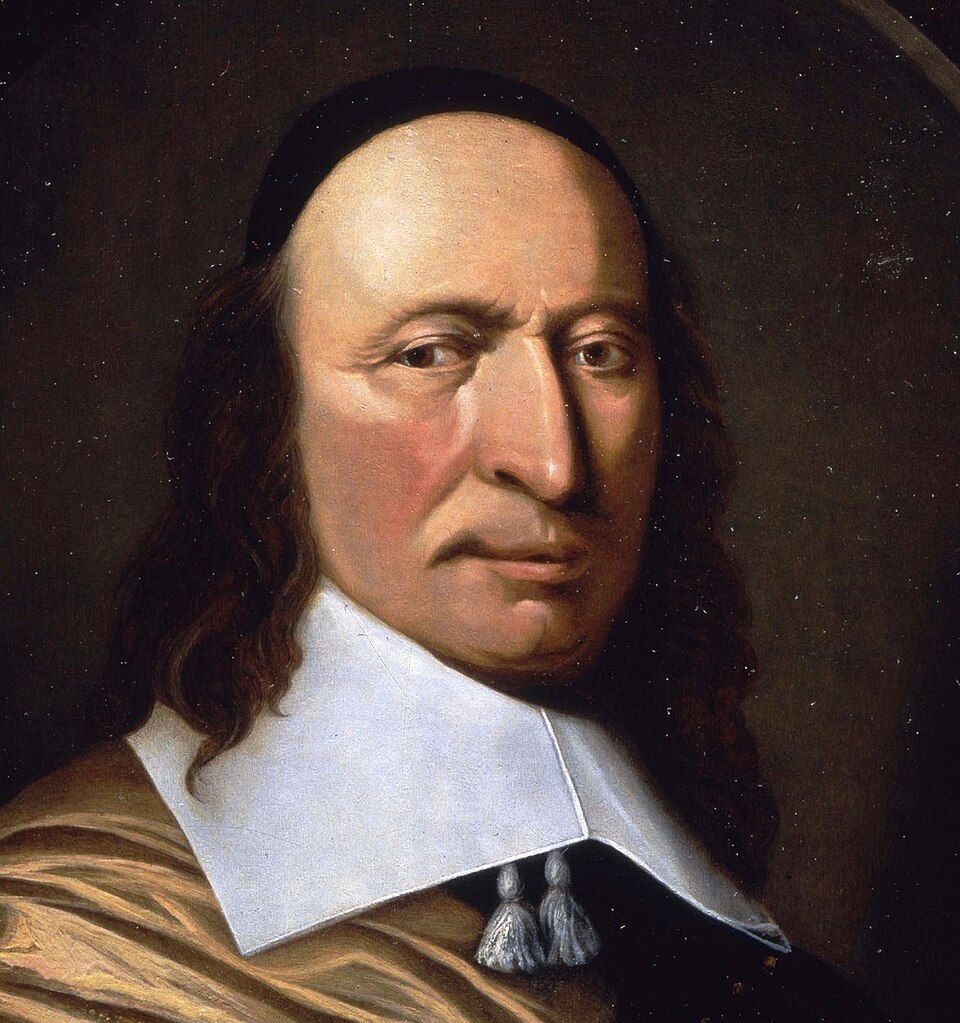 Face-cropped detail of the same c.1660 portrait. Zoomed to the head — best direct reference for the nose, eyes, moustache and hair. — Source (Wikimedia Commons, PD)
_Stuyvesant_portrait_c1660_(cropped).jpg)
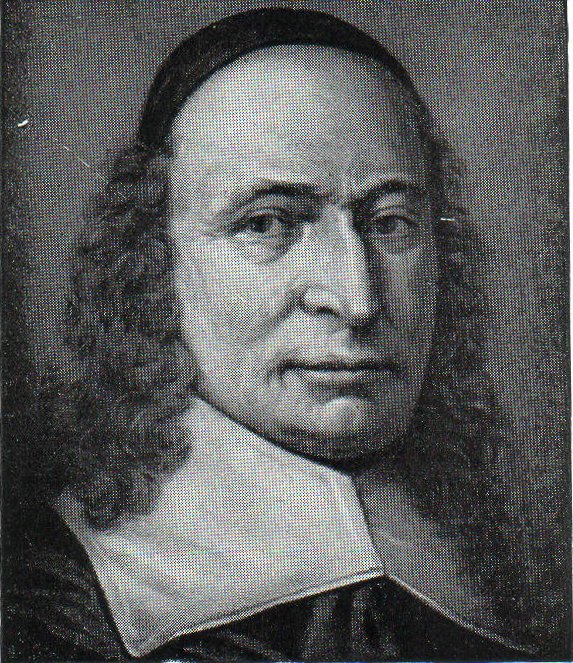 Later engraving after the Couturier portrait. An alternate tonal read of the same face — helps distinguish features that sit in shadow in the painting. — Source (Wikimedia Commons, PD)

Sources
- Wikipedia — Peter Stuyvesant
- New Netherland Institute — Peter Stuyvesant
- New-York Historical Society — “Peg Leg” Peter Stuyvesant
- Wikipedia — Articles of Surrender of New Netherland
- Gilder Lehrman Institute — The surrender of New Netherland, 1664
Cross-references
Historical descriptions are best-effort from the cited sources. Where no contemporaneous physical description survives, traits are flagged as inferred from later portraits or period convention. No physical specifics were invented; unsourced details (notably Stuyvesant’s height/build) are called out as undocumented.