

Alexander Hamilton
Periods: Manhattan 1776 Lived: January 11, 1755 or 1757 (Charlestown, Nevis) – July 12, 1804 (New York City) In 1776: Captain, New York Provincial Company of Artillery, age ~19–21
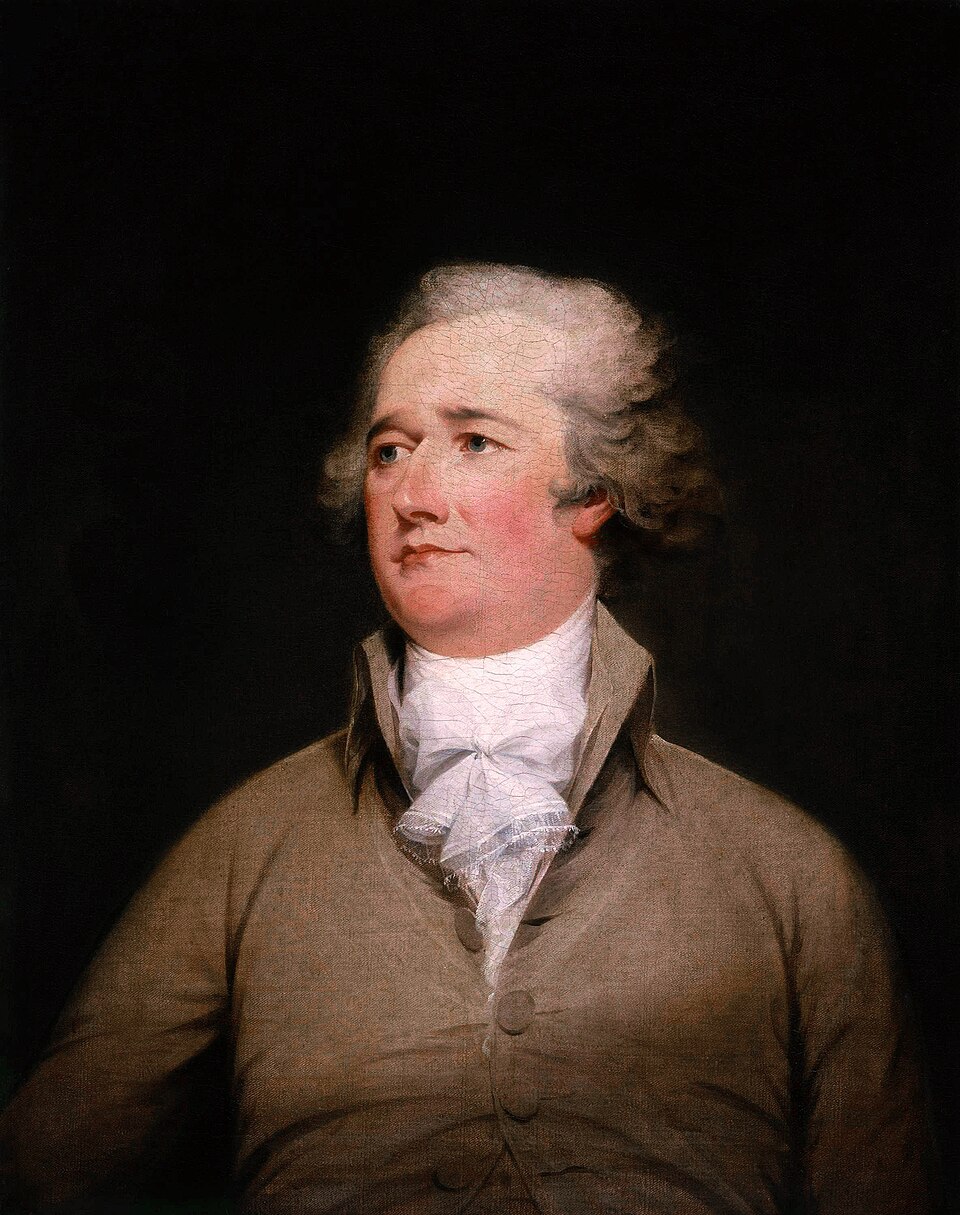
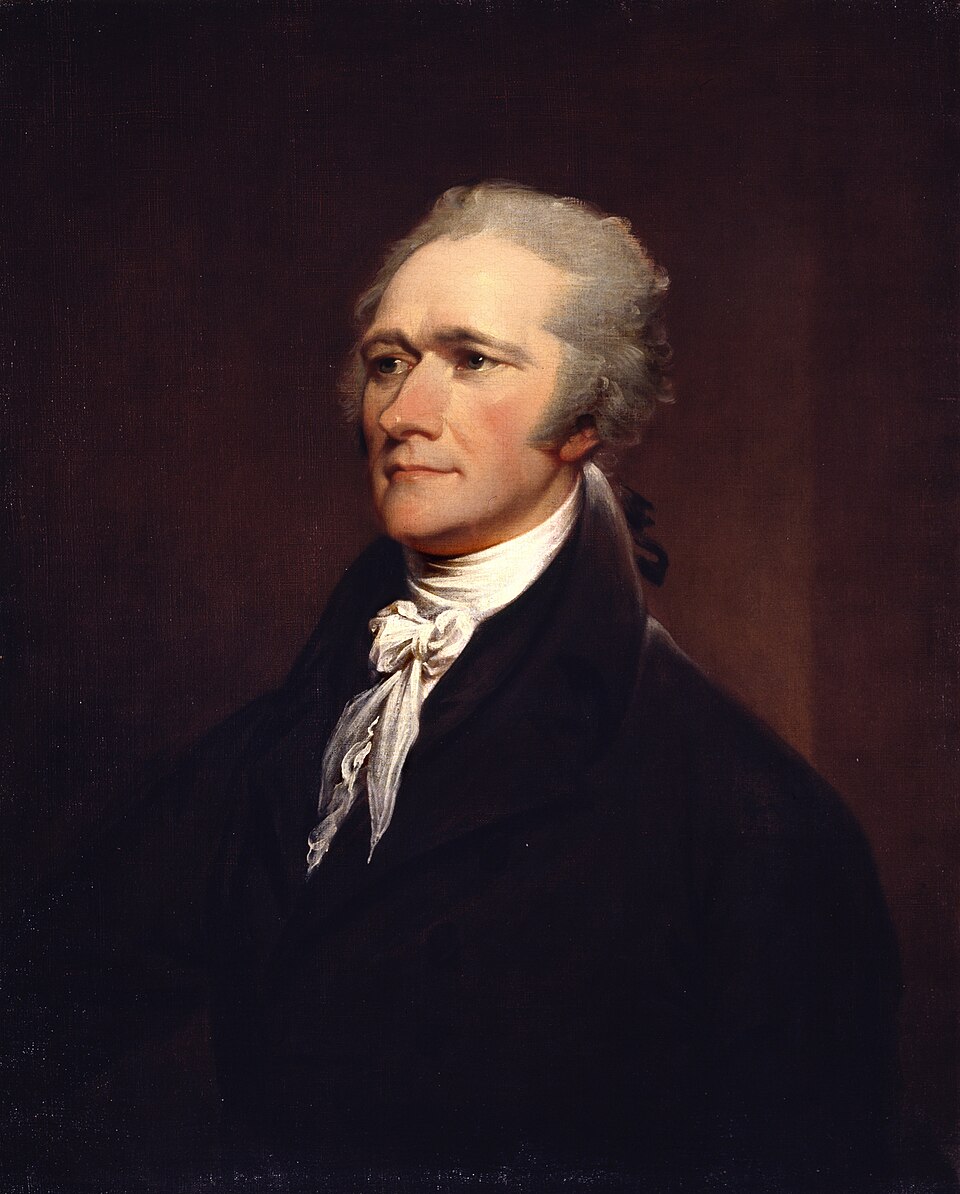 Alexander Hamilton by John Trumbull, 1806 (National Portrait Gallery). Public domain, via Wikimedia Commons. Painted posthumously — Hamilton at ~47; in 1776 he was a teenager. See MetaHuman Likeness Reference for age-corrected guidance.

Summary
Immigrant clerk from the West Indies who became a King’s College student, a 21-year-old artillery captain in the 1776 defense of New York, Washington’s aide-de-camp, principal author of the Federalist Papers, and the first Secretary of the Treasury. Of all the founders, Hamilton’s footprint is the most densely Manhattan: student on Park Row, gunner on the Common and at Bayard’s Mount, lawyer on Wall Street, and finally a grave in Trinity Churchyard. Killed by Aaron Burr in a duel at Weehawken, July 11, 1804.
Early Life (1755/57–1773)
Born out of wedlock in Charlestown, Nevis — his birth year is genuinely disputed (his grave says 1757; a Nevis probate record points to 1755). Orphaned in his early teens on St. Croix, he clerked for the import-export house of Beekman and Cruger, where his precocity earned him local sponsorship for a mainland education after his famous hurricane letter of 1772.
King’s College (1773–1775)
Hamilton arrived in New York and enrolled at King’s College (now Columbia) in late 1773/early 1774. He made his public debut as a patriot pamphleteer while still a student (“A Full Vindication,” “The Farmer Refuted”) and reportedly talked a Liberty-pole mob out of lynching college president Myles Cooper in May 1775 — buying the Loyalist just enough time to escape over the fence. His studies effectively ended when the war swallowed the city; the college buildings became a military hospital.
Artillery Captain, 1776
Hamilton drilled with the volunteer militia company known as the Hearts of Oak in the churchyard of St. Paul’s Chapel, and took part in the August 1775 raid that hauled cannon away from the Battery under fire from HMS Asia. On March 14, 1776 the New York Provincial Congress commissioned him captain of the New York Provincial Company of Artillery — a company he raised, drilled, uniformed, and paymastered himself, at roughly 19–21 years old. The company was quartered near the Common that spring (per Chernow) and worked the city’s gun positions through the summer.
The night of August 29, 1776
Two days after the American defeat at the Battle of Brooklyn, Washington secretly ferried his army across the East River from Brooklyn to Manhattan through the night of August 29–30. Tradition places Hamilton and his artillery company that night at the Bayard’s Mount fort (Bunker Hill) — the big heptagonal redoubt on the highest hill in lower Manhattan — standing watch in the nor’easter while the evacuation ran below. Accounts of Hamilton’s exact whereabouts that night vary, so TimeWalk treats this as reported/traditional rather than certain. The fort page carries a fuller, source-flagged reconstruction of his garrison life that week — where he slept, what he ate, and his hours on the rampart: see Bayard’s Mount Fort — Garrison Life.
Retreat and redemption (September 1776 – January 1777)
- September 15, 1776 — Kip’s Bay: when the British landed and the American line collapsed, Hamilton’s company retreated up the island with the rearguard, losing its baggage and one of its cannon in the scramble.
- September 16 — Harlem Heights: present with the army as it turned and checked the British advance.
- October 28 — White Plains: his guns helped contest the fighting at Chatterton’s Hill.
- December 26 & January 3 — Trenton and Princeton: his battery served in Washington’s counterstroke; tradition has Hamilton’s guns firing on Nassau Hall at Princeton.
Washington’s Aide and After (1777–1789)
On March 1, 1777 Washington appointed Hamilton aide-de-camp with the rank of lieutenant colonel — four years as the commander-in-chief’s pen and fixer, ended by his field command at Yorktown (October 1781), where he led the night bayonet assault on Redoubt No. 10.
After the war he read law and opened practice in New York, living and working at 57 Wall Street on Wall Street. He founded the Bank of New York (1784), sat in the Confederation Congress and the Constitutional Convention, and wrote 51 of the 85 Federalist Papers (1787–88) that carried ratification in New York.
Treasury and the 1790s
First Secretary of the Treasury (1789–1795) under Washington — funding and assumption of the war debt, the first Bank of the United States, the Mint, the Coast Guard’s ancestor (the Revenue Cutter Service). Afterward he returned to his Wall Street law practice and founded the New York Evening Post (1801), still publishing today.
NYC Sites
- King’s College — student, c.1773–75
- The Common / The Battery — 1775–76 artillery service
- Bayard’s Mount Fort (Bunker Hill) — reported post, night of August 29, 1776
- Wall Street — home and law office at No. 57 from 1783
- Fraunces Tavern — Society of the Cincinnati dinner, July 4, 1804: Hamilton and Burr sat at the same table a week before the duel; Hamilton is said to have sung while Burr stayed silent
- The Grange — his 1802 country house in upper Manhattan (Harlem), the only home he ever owned; it survives, relocated, in St. Nicholas Park near W. 141st Street
- Trinity Church — burial place, Trinity Churchyard
The Duel and Death (July 1804)
Years of political enmity with Aaron Burr — capped by Hamilton’s maneuvering against Burr in the 1800 electoral tie and the 1804 New York governor’s race — ended on the dueling ground at Weehawken, New Jersey, July 11, 1804. Burr’s shot struck Hamilton above the right hip; he was rowed back across the Hudson and died the next afternoon, July 12, at William Bayard Jr.’s house on Jane Street in Greenwich Village. He was buried in Trinity Churchyard on July 14, 1804, with civic honors and the city in mourning.
TimeWalk Notes
- For the 1776 level, Hamilton is the same age as a college junior — see Alexander Hamilton at 21 (1776) for the MetaHuman character brief and MetaHuman Likeness Reference for the sourced physical description (slight, ~5’7”, reddish-brown hair, violet-blue eyes).
- Best documented 1776 scene hooks: drilling his company near the Common; the storm watch at Bayard’s Mount on August 29 (flagged reported/traditional); the Kip’s Bay scramble on September 15.
Modeling reference: three ages
Portrait-reference sheet for the 3D character build (compiled August 2026). Hamilton is modeled at three target years: 1776 (artillery captain, age ~21), 1787 (Federalist Papers, age ~32), 1804 (the duel, age ~49). Born January 11, 1755 — he claimed 1757, so period documents may read two years younger. All images below are public domain; high-res files live in wiki/images/ with the ref-hamilton- prefix.
Constant traits (all three ages)
From the account of his friend William Sullivan and grandson Allan McLane Hamilton:
- Slight, erect build, about 5’7” and thin, but with a commanding, energetic bearing
- Reddish-brown / auburn hair, often powdered for formal occasions (wear it natural and queued in 1776, powdered from the late 1780s on)
- Deep-set violet-blue eyes under a strong brow
- Fair, rosy complexion, ruddy when animated; pronounced smile lines in the life portraits
- Long, somewhat Roman nose; strong chin and jawline
Likeness reliability, in one line each: the Ceracchi bust (modeled from life 1791–92) is widely considered the truest record of his features; his grandson thought the Sharples pastels the best likeness; Hamilton himself reportedly favored Weaver’s profile; the famous Trumbull 1806 ($10 bill) is posthumous and built on the Ceracchi bust.
1776 — Artillery captain, age ~21
No reliable contemporary portrait of Hamilton at ~21 exists. The claimed “1777 Peale miniature” at the Museum of the City of New York is of uncertain attribution/dating; nothing verified survives from his war-youth. Recommendation for the modeler: take skull, nose, jaw and brow from the Ceracchi bust (below), take the youngest verified painted likeness — the Peale miniature type of c. 1780, when he was ~25 — as the color/feature key, then read the age down: slimmer face, smoother skin, unpowdered auburn hair tied in a queue, and the written description above as the governing spec.
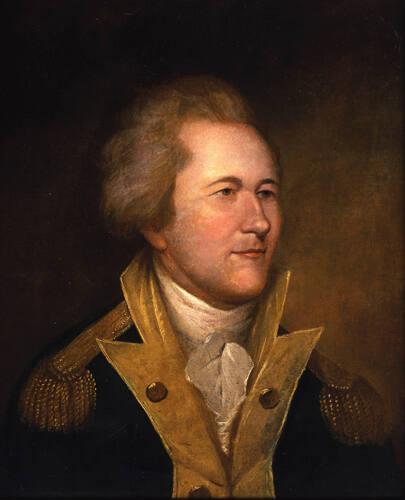 After Charles Willson Peale, miniature type of c. 1780 (copy; New-York Historical Society, object 8318). The earliest verified likeness type — Hamilton at ~25 in Continental uniform, the closest anchor to the 1776 target. Wikimedia Commons, PD. Peale’s original c. 1780 watercolor-on-ivory miniature is at Columbia University Art Properties.
_1841_2.jpeg)
1787 — Federalist Papers, age ~32
Closest life records: the Ceracchi bust (from life 1791–92, age ~36) and Trumbull’s 1792 full-length (age ~37). Read both down ~5 years: slightly fuller hair, fewer lines, same bone structure.
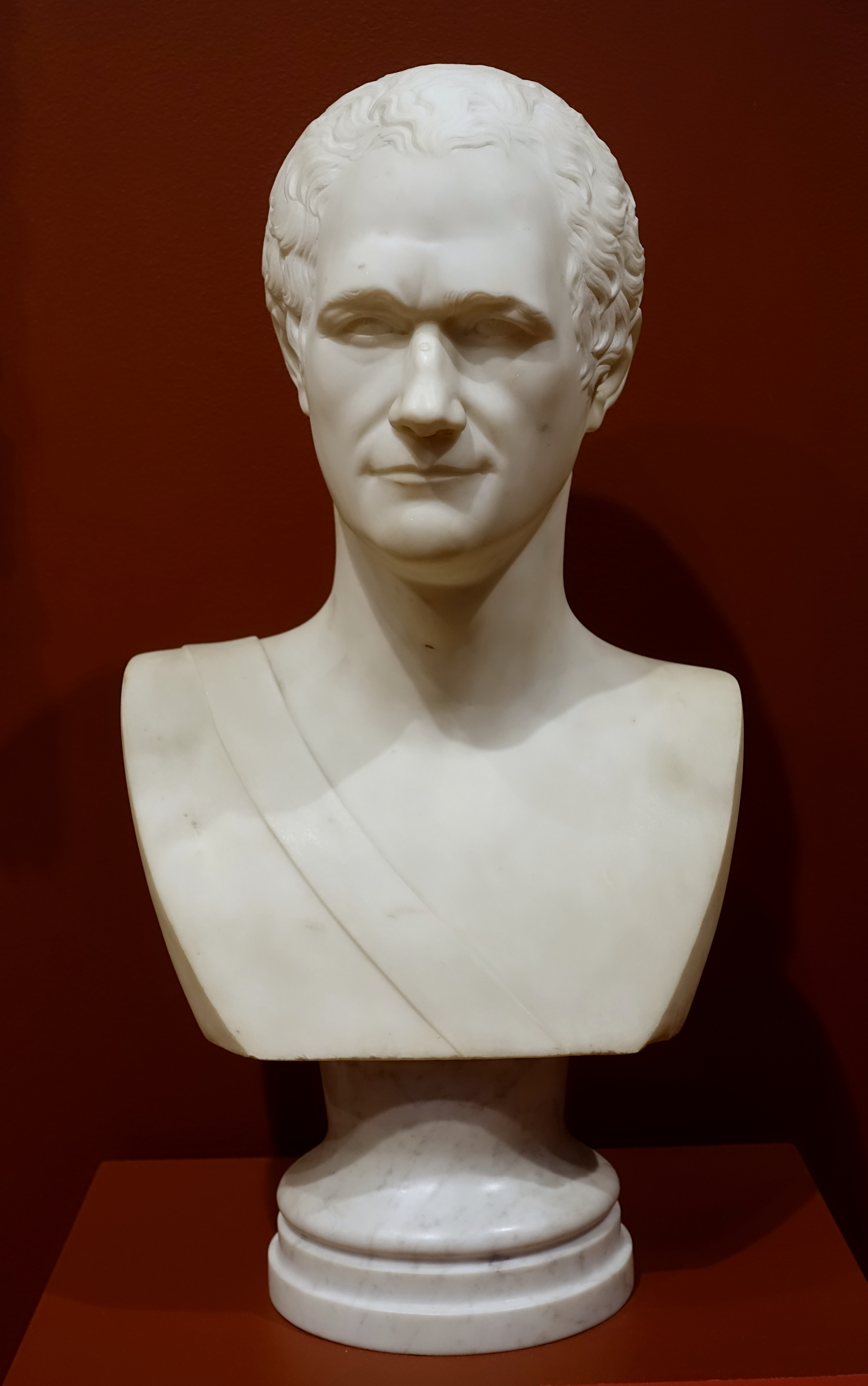 Marble bust by Giuseppe Ceracchi, 1794 (this carving at the Currier Museum of Art; the original marble is at Crystal Bridges). Modeled from life 1791–92 — the truest 3D record of his skull, nose, jaw and brow; primary sculpt reference for every age. Wikimedia Commons, PD. Smaller Crystal Bridges photo:
 ref-hamilton-3-ceracchi-bust-1794.jpg.

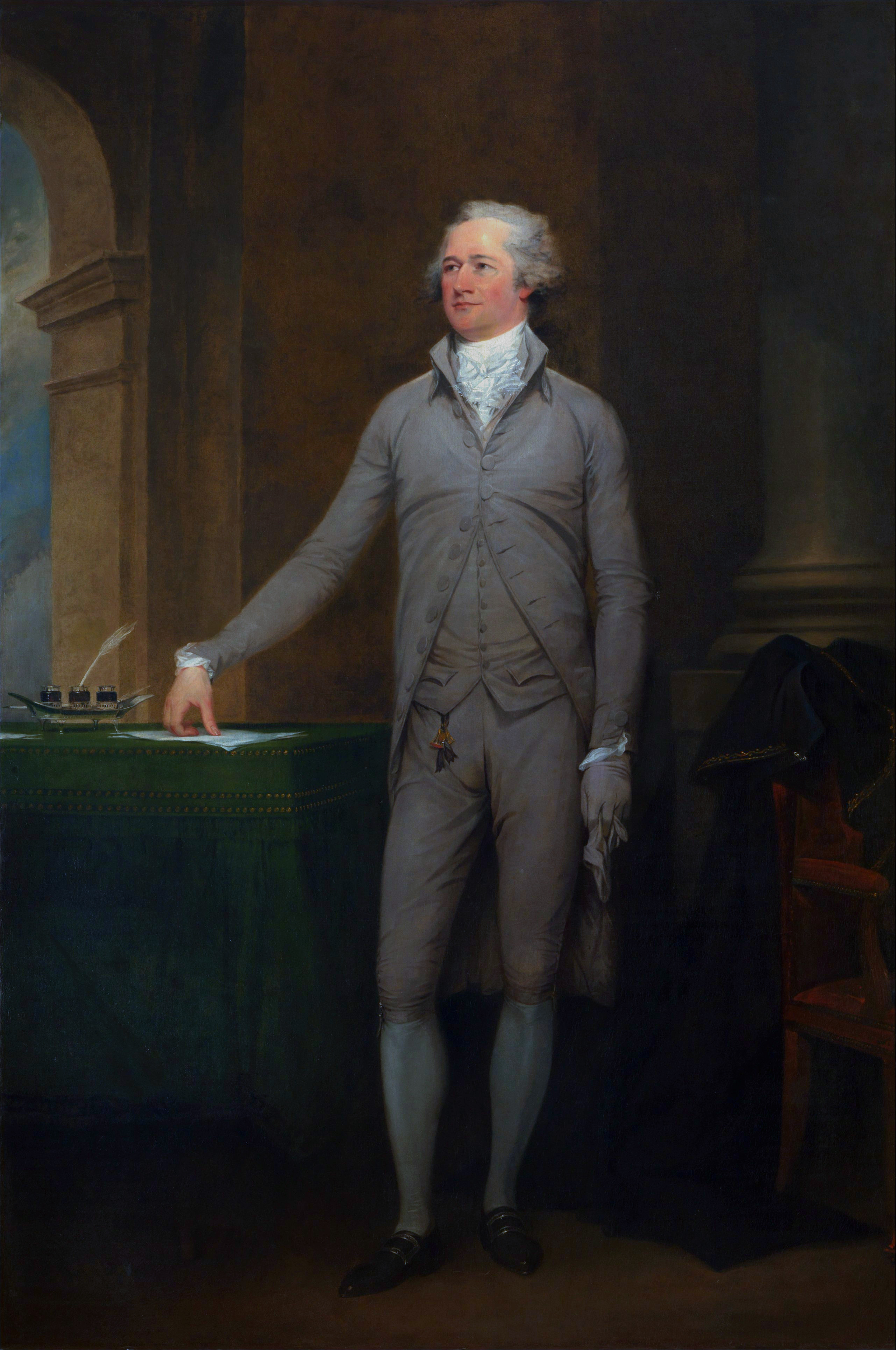 Full-length by John Trumbull, 1792 (Metropolitan Museum of Art / Crystal Bridges). Painted from life for New York merchants — best full-body, posture and costume reference for the statesman years. Wikimedia Commons, PD.

 Bust-length by John Trumbull, c. 1792 (National Gallery of Art). Crispest near-frontal painted face of the period — pair with the bust for color. Wikimedia Commons, PD.

1804 — The duel, age ~49
No from-life portrait exists at exactly 1804; bracket it with the mid-1790s profiles (Sharples, Weaver) and Trumbull’s posthumous head, adding gray at the temples and deeper smile lines.
Posthumous portrait by John Trumbull, 1806 (National Portrait Gallery) — the $10-bill image, face reconstructed from the Ceracchi bust. Iconic, but read as an idealization, not a document. Wikimedia Commons, PD.
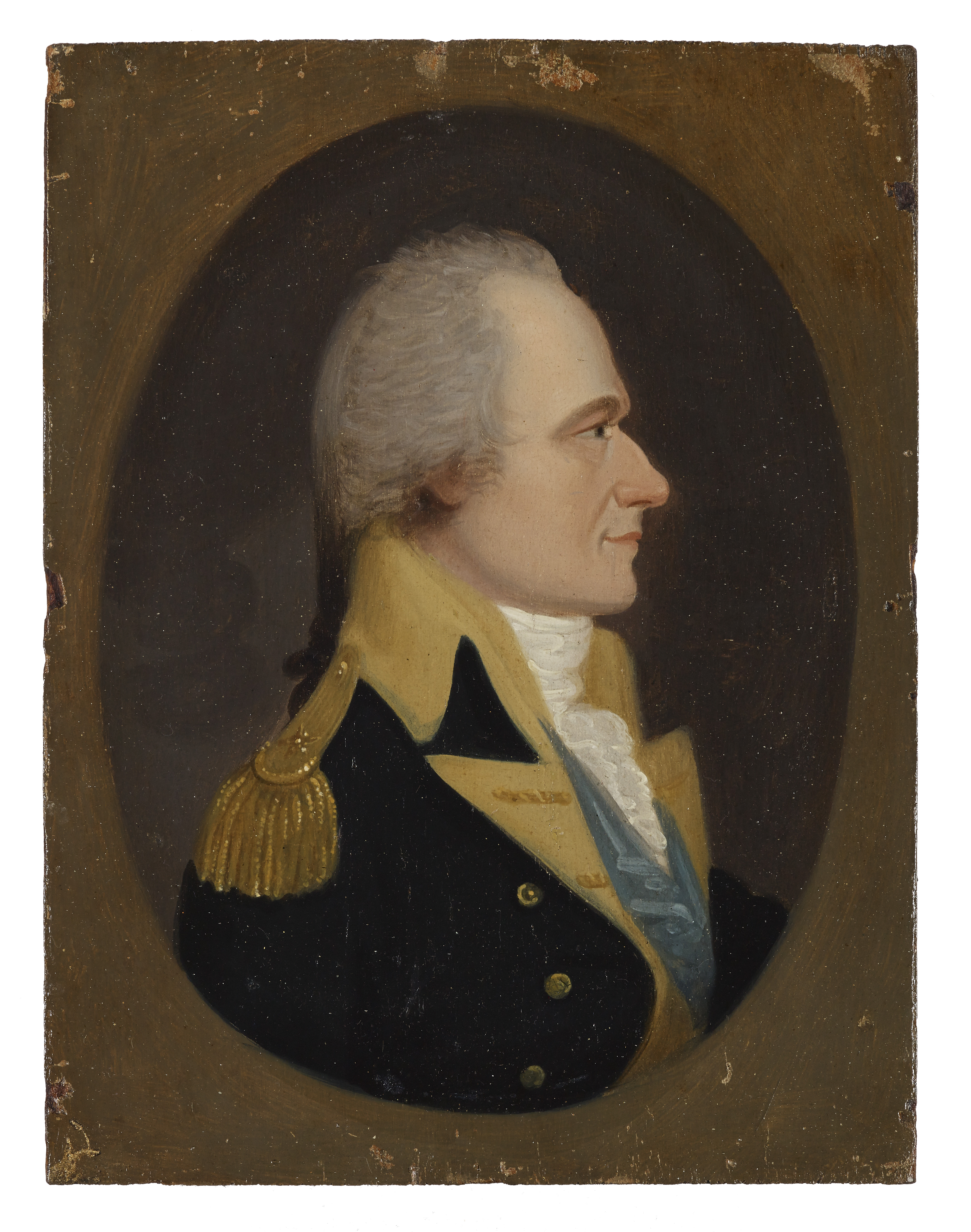 Profile by William J. Weaver, c. 1794–1806 (Indianapolis Museum of Art, 47.47). Hamilton himself reportedly preferred the Weaver profile type — best high-res side view of nose line, chin and receding hair of the late years. Wikimedia Commons, PD.

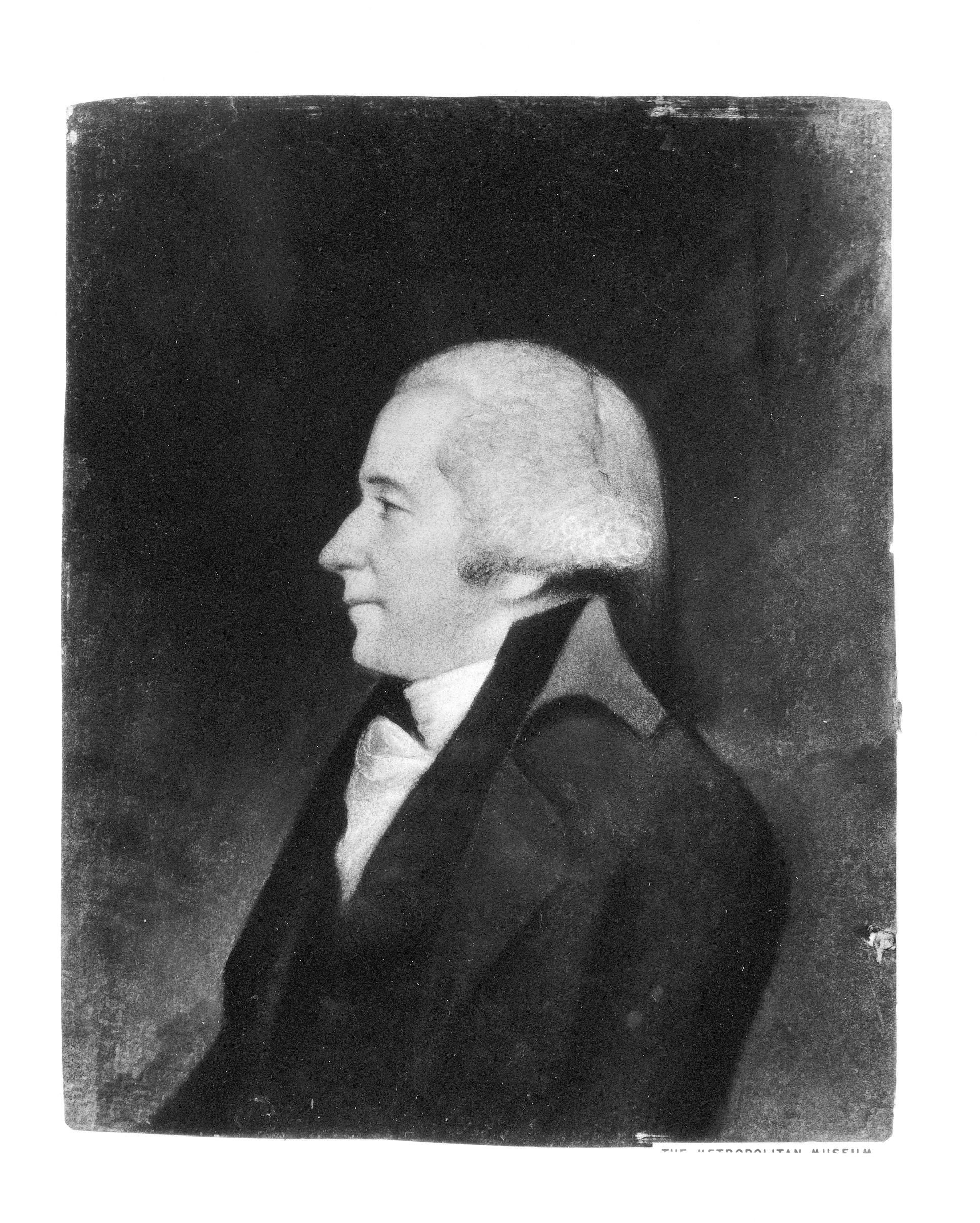 Pastel by James Sharples (or Ellen Sharples), c. 1796 (Metropolitan Museum of Art, 24.109.98 — archival B&W photograph of the pastel; CC0). His grandson called the Sharples profiles the best likeness ever made of him; use for silhouette despite the degraded reproduction. Wikimedia Commons.

Portrait reference table
| Ref file | Work / artist / date | Institution | Best for | Reliability |
|---|---|---|---|---|
| ref-hamilton-4 | Miniature type, after Charles Willson Peale, c. 1780 | N-YHS (copy); Peale original at Columbia | 1776 (closest age, ~25) | Copy after the earliest verified likeness |
| ref-hamilton-3 / 8 | Marble bust, Giuseppe Ceracchi, 1791–94 | Crystal Bridges (original); Currier (carving) | all ages — skull/3D | ★ From life; consensus truest likeness |
| ref-hamilton-6 | Full-length, John Trumbull, 1792 | Met / Crystal Bridges | 1787–92 body & costume | From life |
| ref-hamilton-1 | Bust-length, John Trumbull, c. 1792 | National Gallery of Art | 1787–92 face color | From life |
| ref-hamilton-5 | Pastel profile, James Sharples, c. 1796 | Met (24.109.98) | 1796→1804 profile | From life; grandson’s pick |
| ref-hamilton-7 | Profile, William J. Weaver, c. 1794–1806 | Indianapolis Museum of Art | 1804 profile | From life type; Hamilton’s own favorite |
| ref-hamilton-2 | Posthumous portrait, John Trumbull, 1806 | National Portrait Gallery | 1804 icon check | Posthumous, from Ceracchi bust |
See also MetaHuman Likeness Reference for the fuller 1776 written-description brief.
Sources
- Ron Chernow, Alexander Hamilton (Penguin, 2004) — company raised March 1776 and quartered near the Common; Kip’s Bay losses; the 1804 duel narrative
- Alexander Hamilton — Wikipedia — life chronology, disputed birth year
- New York Provincial Company of Artillery — Wikipedia — commission date and unit service
- Hearts of Oak (New York militia) — Wikipedia — pre-commission militia service
- Smithsonian — “Hamilton Takes Command” — the young artillery captain in 1776
- Hamilton Grange National Memorial — NPS — The Grange
- Trinity Church Wall Street — Hamilton burial — Trinity Churchyard grave